Family Owned & Operated Since 1971• Bakersfield, CA

10 product families(10 total products)
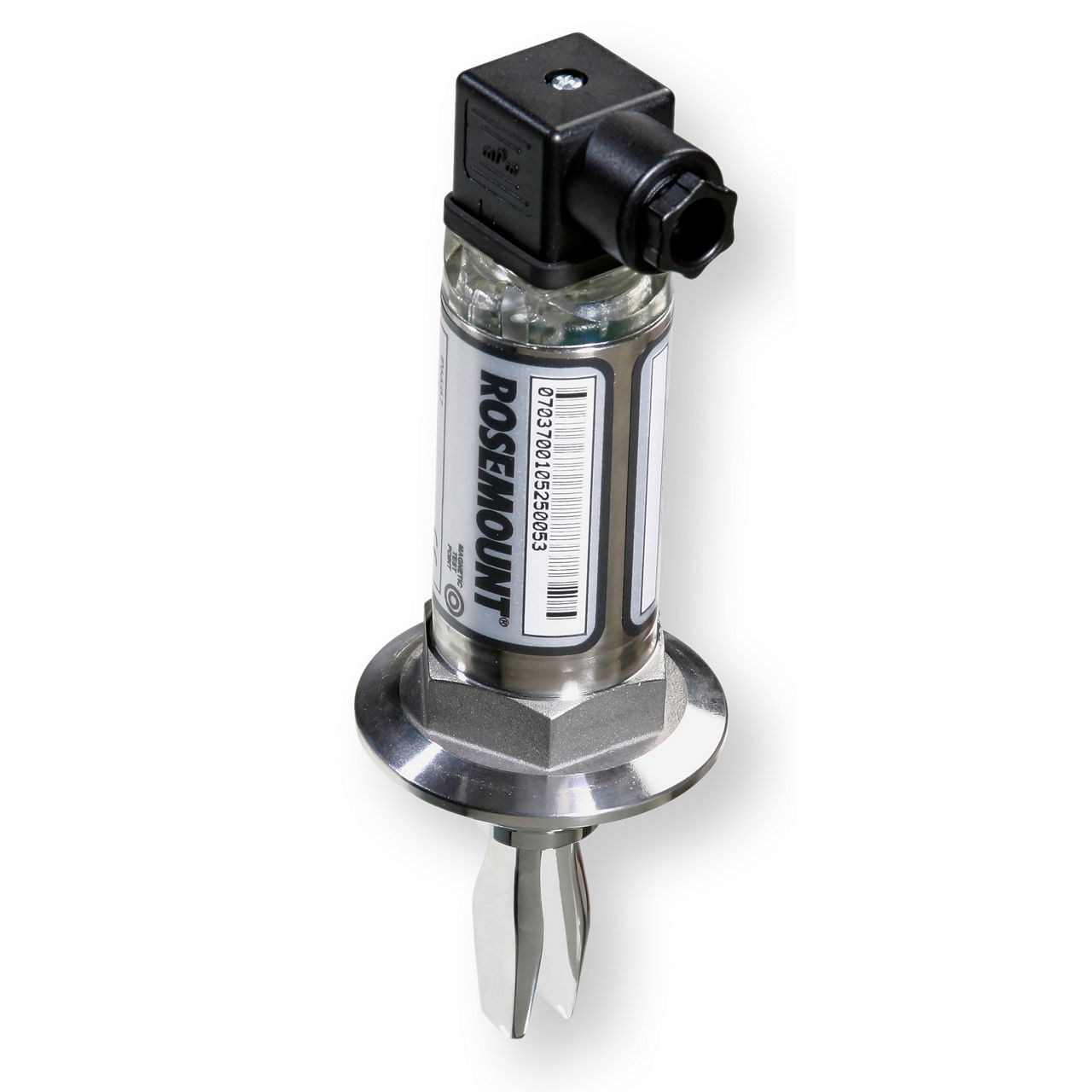
Compact, low-cost vibrating fork level switch — point-level detection for liquids using fork vibration frequency change when wet vs dry. Single direct-load relay output (DPCO or PNP/NPN), no moving parts, no calibration, immune to flow turbulence and aerated/foaming liquids that defeat float and capacitance switches. Best for high/low alarms, pump dry-run protection, and overfill prevention on storage tanks. Common process connections (NPT, BSP, Tri-Clamp, flanged) and fork extensions to 4 m. The workhorse Rosemount level switch for general-process duty.
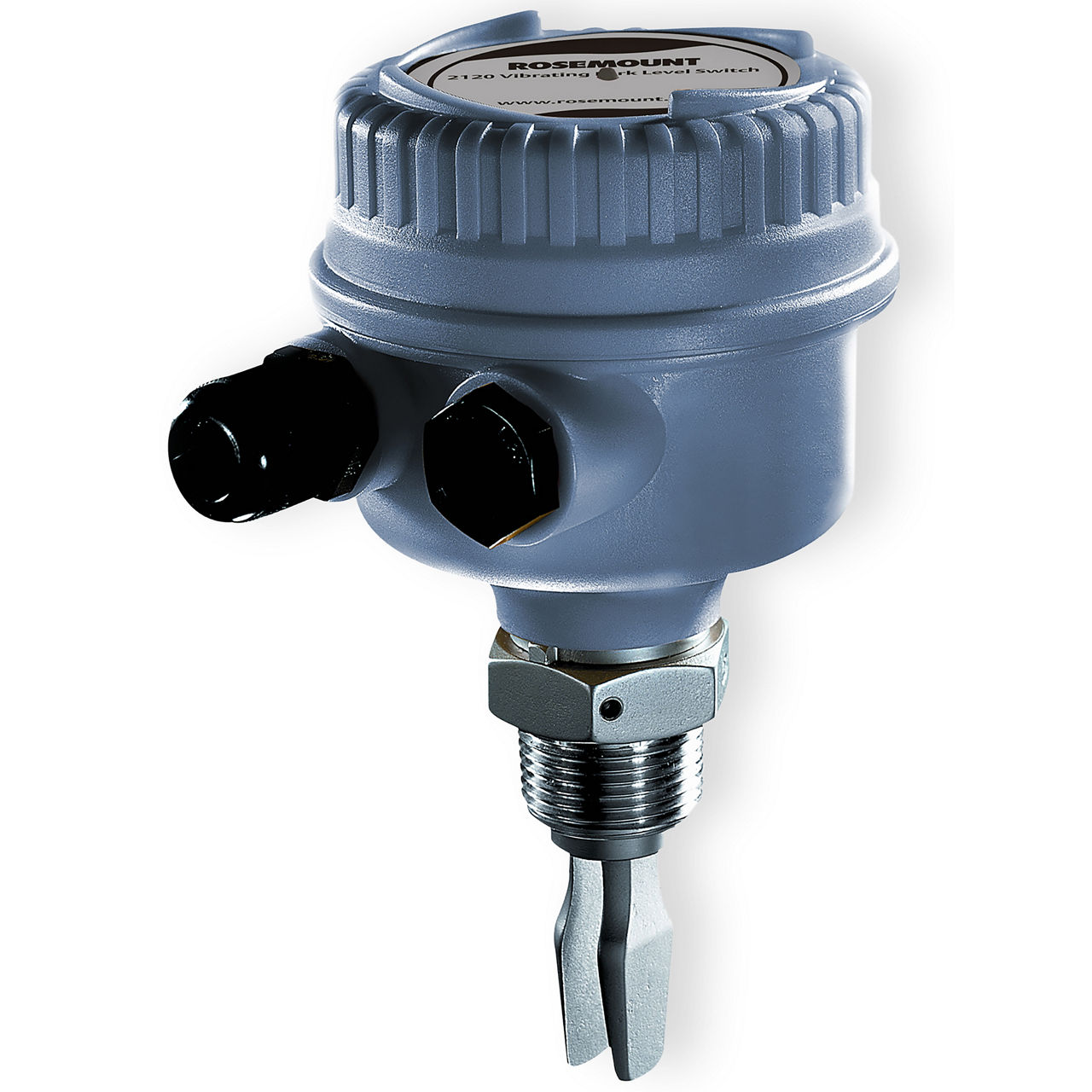
Mid-tier vibrating fork level switch — same fork-resonance principle as the 2110, with expanded electronics options. Choose direct-load relay, 8/16 mA load-driven output for two-state PLC inputs, NAMUR-namur compatibility, or remote-electronics housing. Magnetic test point lets technicians verify operation without process intervention. Used where the 2110's basic relay isn't sufficient — load-driven inputs, harsh ambient, hazardous-area installations.
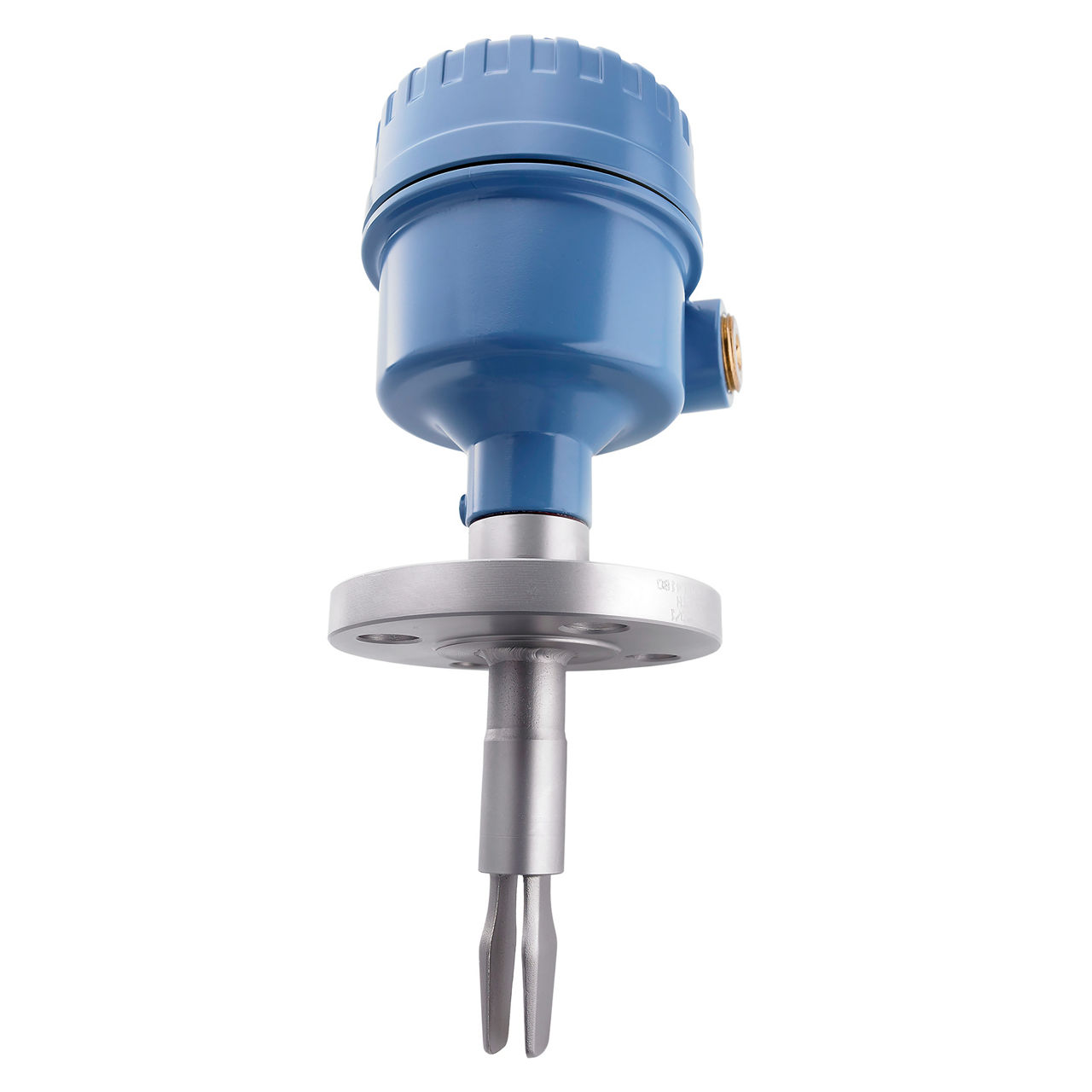
HART-enabled vibrating fork level switch — same proven fork-resonance technology as the 2110/2120, with two-wire 4-20 mA + HART communication for remote configuration, diagnostics, and trending of fork frequency. Continuously reports fork health (build-up detection, corrosion warning) so a maintenance team can replace before the switch fails. Best for plants with HART-aware asset-management systems (AMS, FieldComm).
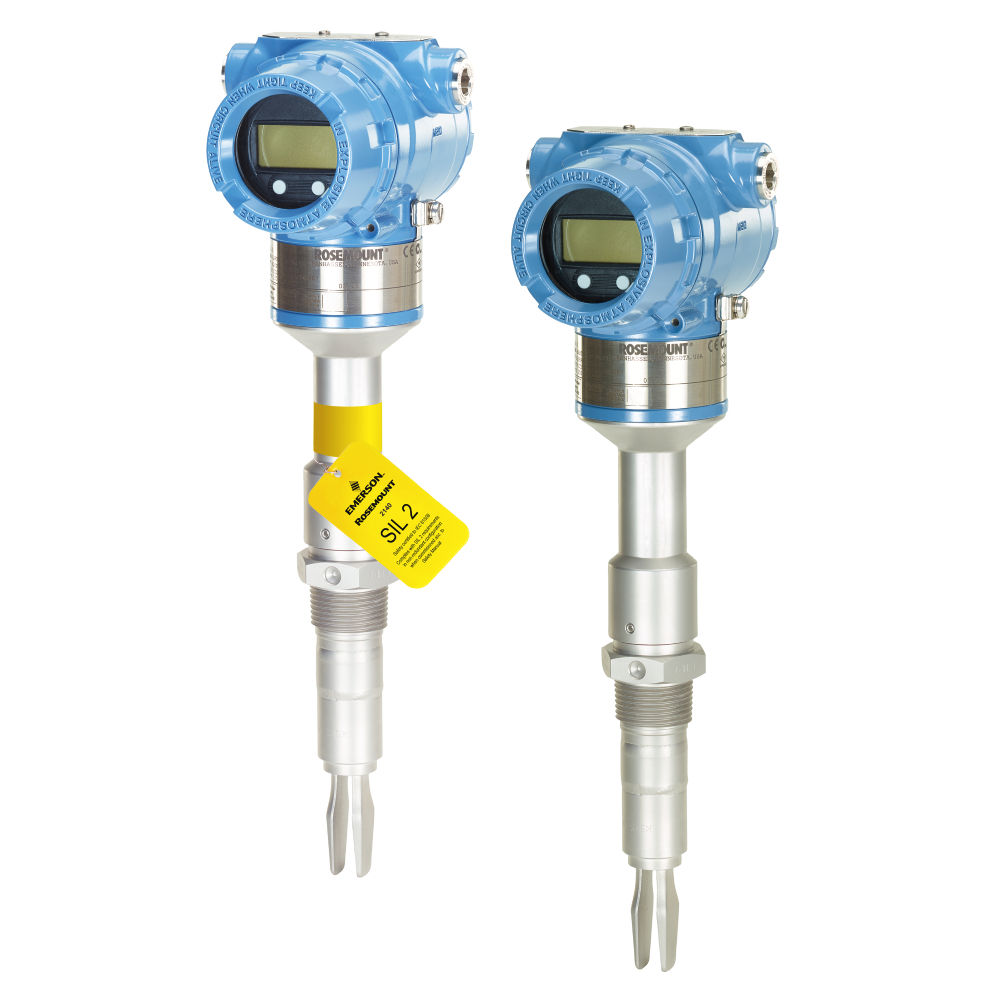
Functional-safety-certified vibrating fork level detector — same fork-resonance core as the 2130 with full IEC 61508 SIL 2 (single) / SIL 3 (redundant) certification for safety-instrumented systems. Best for overfill prevention, dry-pump protection, and other safety-critical applications where the underlying detection technology must carry an independent third-party safety certification. HART or two-channel digital output with diagnostic coverage.
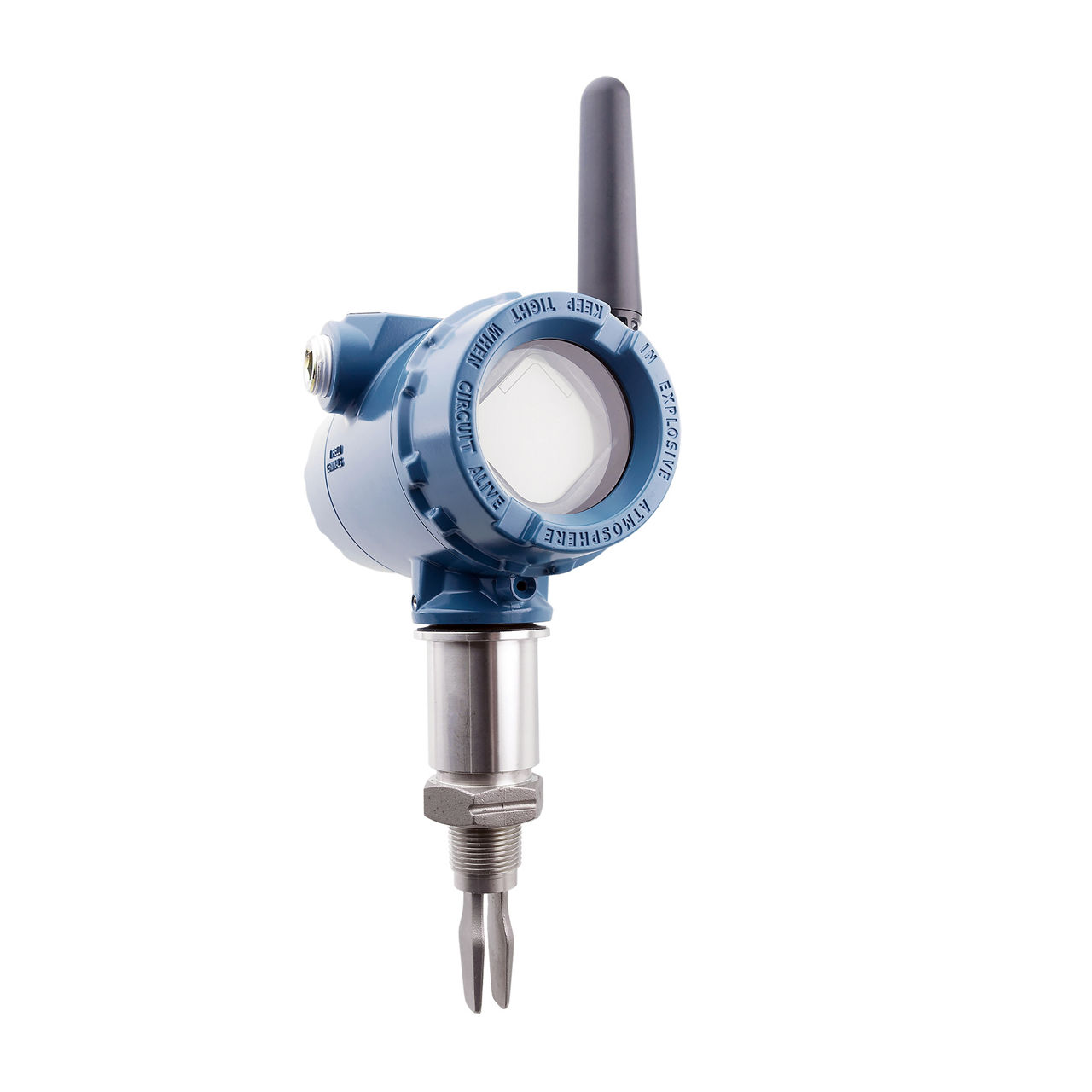
WirelessHART-powered vibrating fork level switch — same proven fork-resonance technology as the 2110/2120 family but with battery-powered WirelessHART radio in place of wired output. Eliminates cable and conduit runs for remote level monitoring on tanks far from the control room. 7+ year battery life under typical update rates. Pairs with an Emerson Wireless 1410S Gateway for the WirelessHART network backhaul. Common application: tank-farm overfill alarms where wired installation is cost-prohibitive.
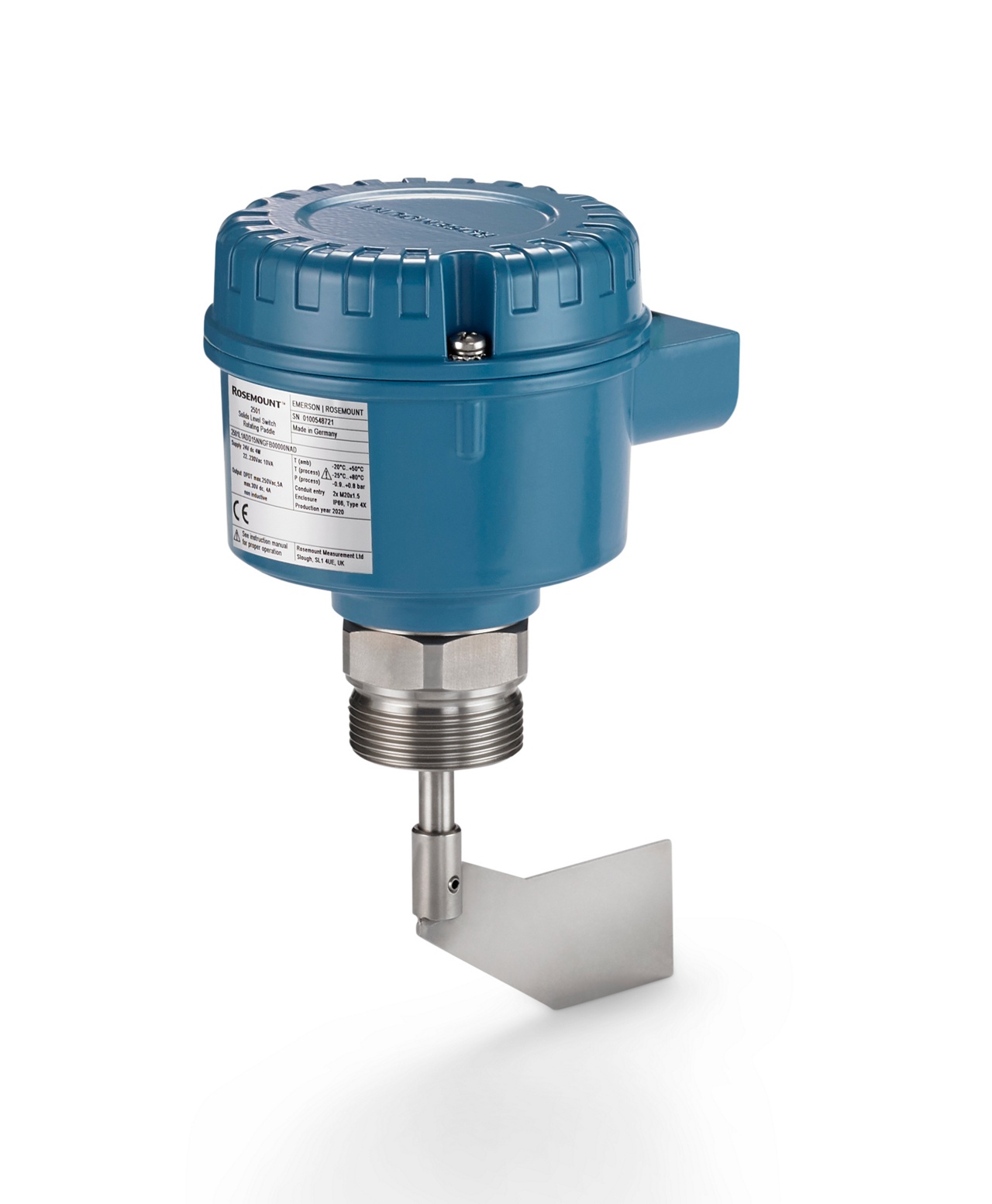
Heavy-duty rotating-paddle point-level switch for bulk solids — a small motor turns a paddle inside the silo; when product covers the paddle the motor stalls and the switch trips. Works on virtually all bulk solids regardless of dielectric, electrostatic charge, or dust. Withstands extreme temperatures up to 1100°C and demanding mechanical conditions (heavy product loads, abrasive media). Best for cement, aggregates, ash, grain, and any bulk solid where vibrating or capacitance sensors fail. Vertical, horizontal, or oblique mounting.
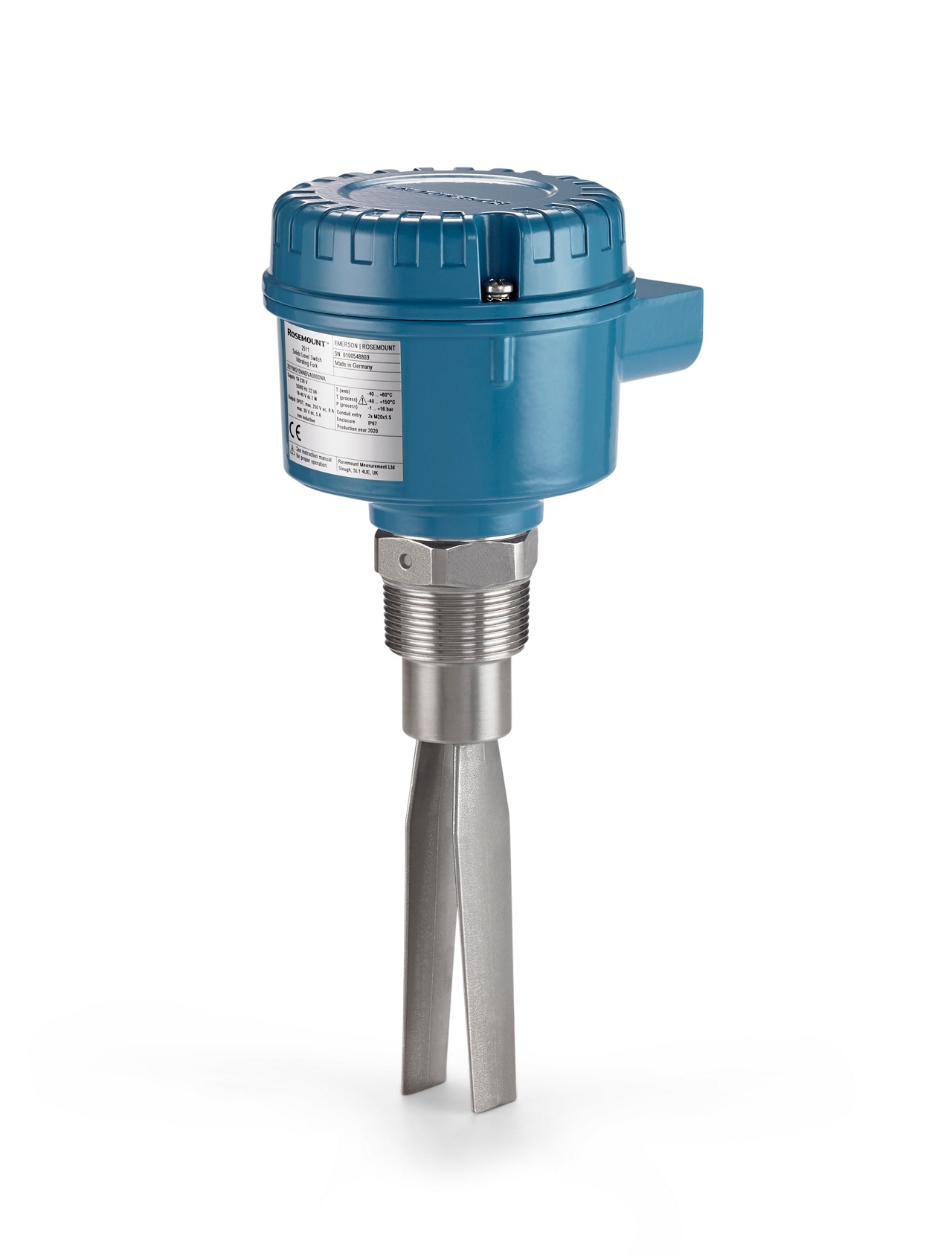
Cost-effective vibrating-fork point-level switch for fine-grained and powdered solids — flour, cement, sand, plastic pellets, grain. Fork resonates at a known frequency in air; when product touches the fork the frequency drops and the switch trips. No moving parts, no calibration, immune to dust and electrostatic charge. Operates up to 150°C. Best for storage and process vessels where the 2501 paddle is over-spec and the 2521 sensitivity isn't required.
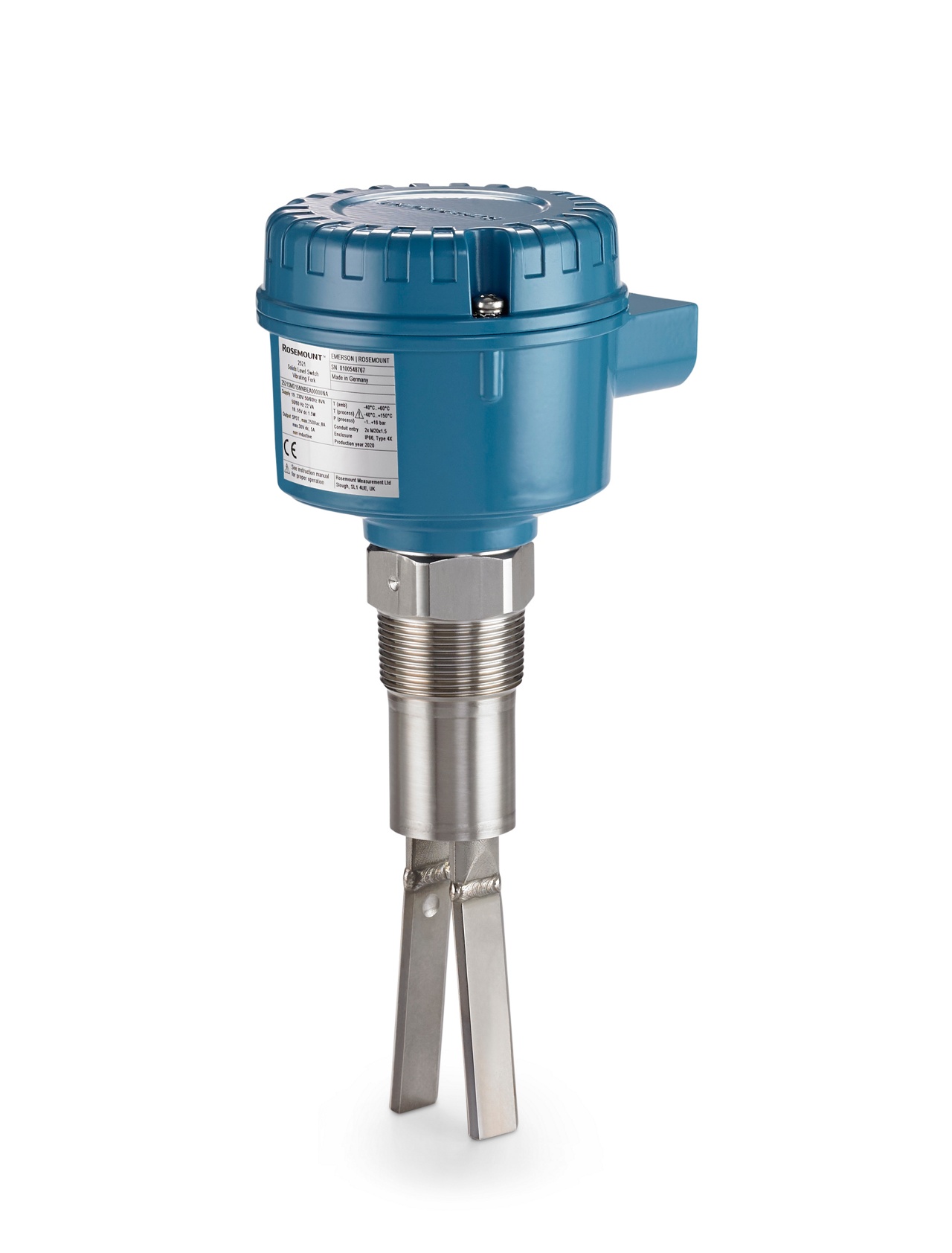
High-sensitivity variant of the 2511 vibrating fork — same proven fork-resonance technology, tuned for extremely low-density bulk media (below 0.3 lb/ft³ / 5 g/L). Catches the fork frequency change even when very light powders or fluffy materials touch it. Best for low-density polymers, fluffy fines, light insulation media, and other powders where the standard 2511 might miss the trigger. Operates up to 150°C. Same process connections, fork extensions, electronics options, and approvals as the 2511.
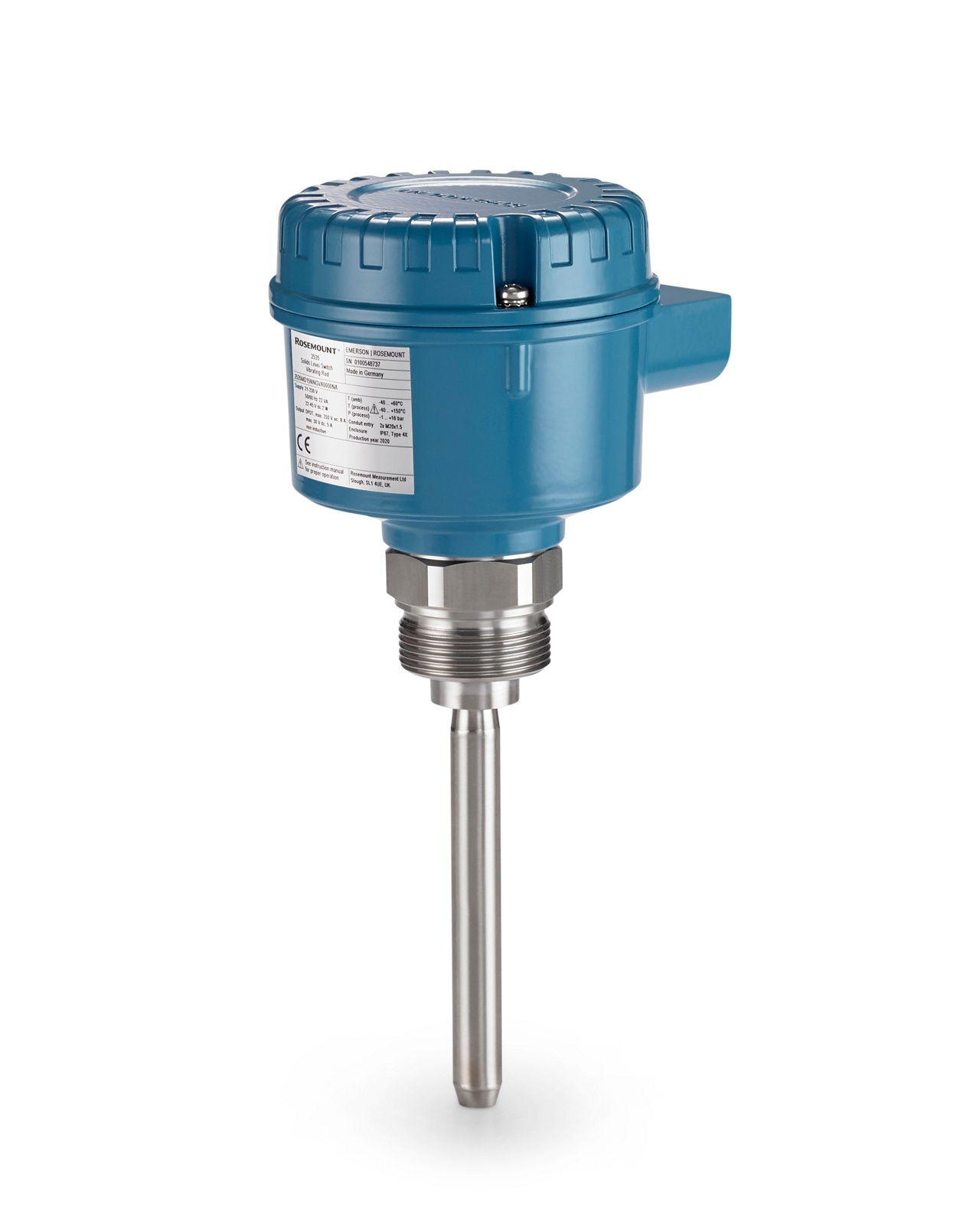
Vibrating-rod (single-tine) point-level switch for fine grains and powders — alternative to the tuning-fork 2511/2521 for media that bridge between fork tines. The single-rod geometry is harder to bridge, more reliable in clumpy or sticky powders. Operates up to 150°C. SST construction, suitable for hazardous and dusty environments. Best for fine powders prone to bridging, light solids, and any storage vessel where fork-style switches have given trouble.
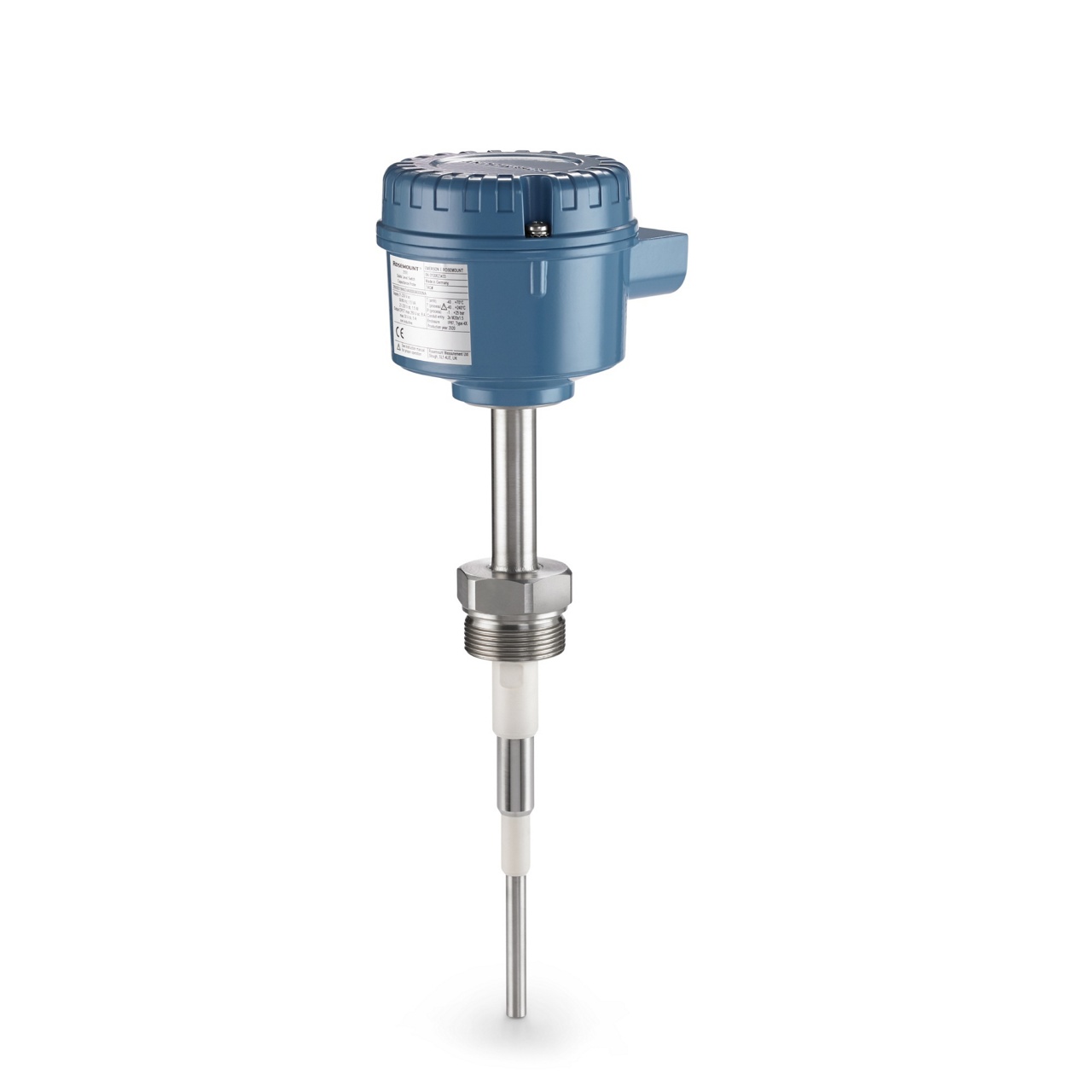
RF-capacitance point-level switch for low-dielectric solids and extreme-condition installations — measures the capacitance change between probe and silo wall when product covers the probe. Active Shield Technology prevents false trips from material build-up on the probe (the most common failure mode of older capacitance switches). Withstands up to 500°C, high mechanical stress, and high tensile forces. Best for low-dielectric materials (some plastics, oils on solids, low-conductivity powders) and high-temperature applications where vibrating-fork/rod 2511/2521/2535 fall outside their thermal envelope.