Family Owned & Operated Since 1971• Bakersfield, CA

12 products
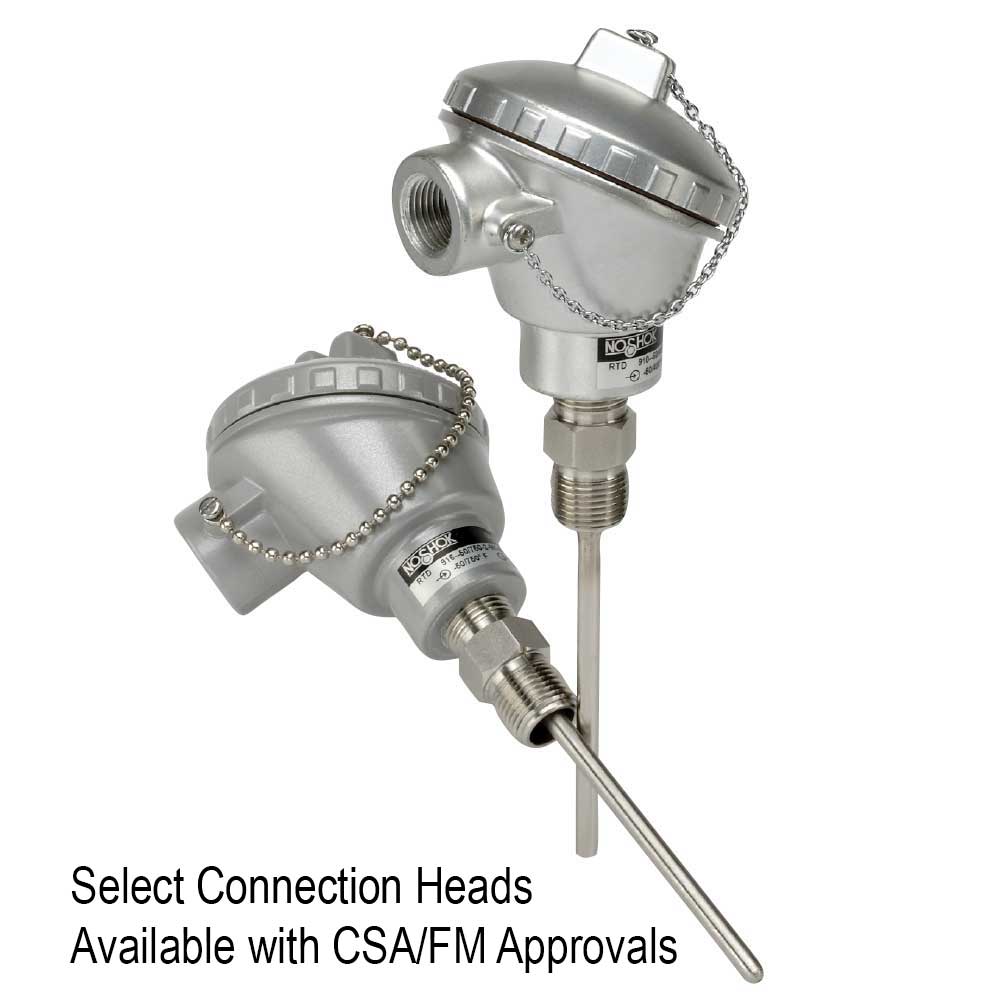
Industrial RTD probe with connection head, fixed element. Configured to order — base list price shown.
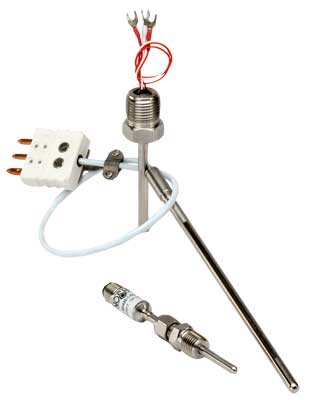
Industrial resistance temperature device (RTD), probe type. Configured to order — base list price shown; specify range, element, probe length.
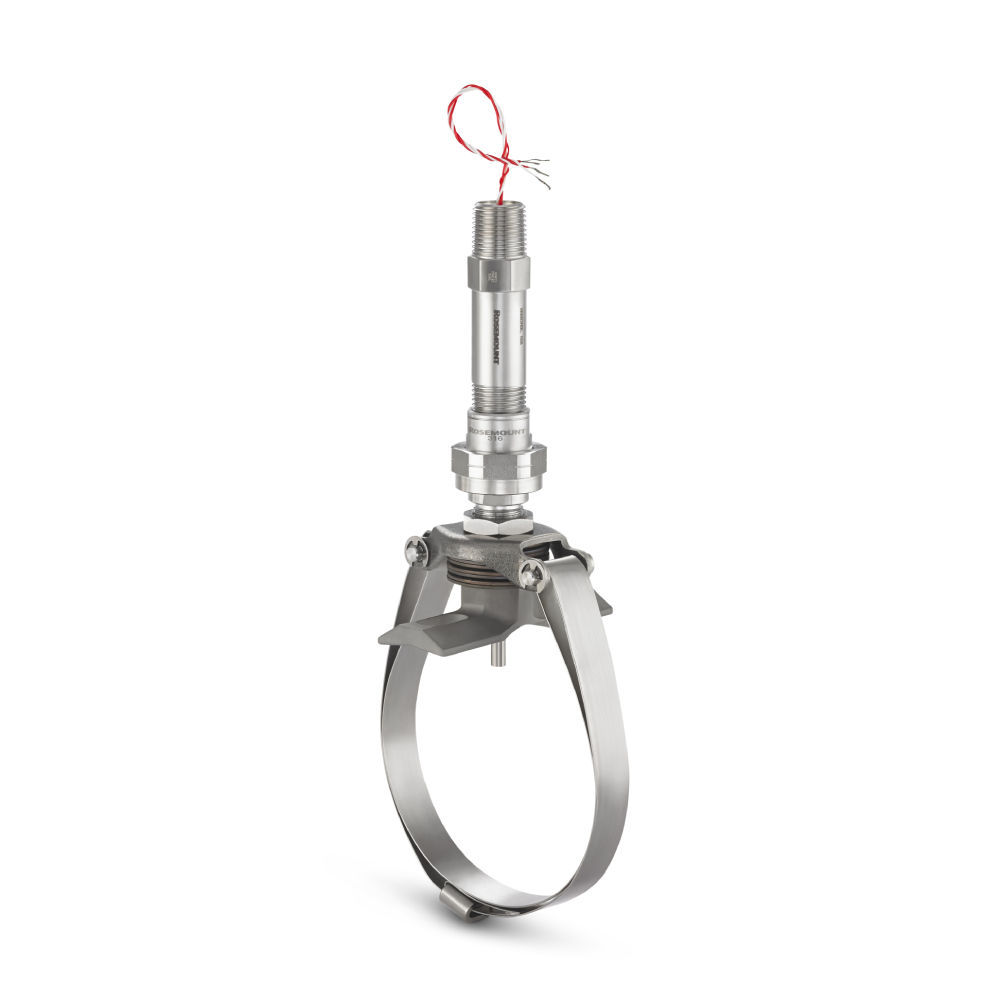
Non-intrusive pipe-clamp temperature sensor — the key piece of Rosemount X-well Technology. Wraps around the outside of a pipe with a thermally-conductive clamp to measure internal process temperature without a thermowell or process penetration. Single-element 4-wire (P1) or dual-element 3-wire (P2) silver-tip RTD, -58 to 572 °F. Pairs factory-assembled with a Rosemount 3144S / 3144P / 648 transmitter and an X-well thermal-conductivity algorithm to back-calculate the internal process temperature. Wide pipe-size selection — DN15 through DN1500 / ½-60 inch — with clamp materials in 316 SST, 304 SST, Super Duplex, and Carbon Steel.
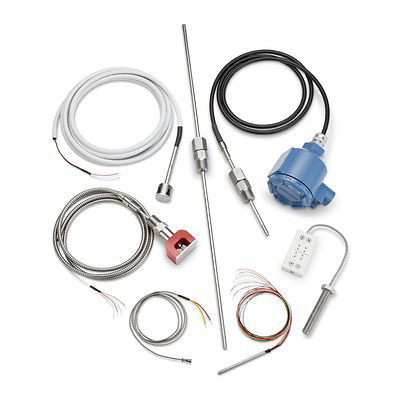
Built-to-Order custom RTD and thermocouple sensor — the flexibility platform of the Rosemount temperature line. Industrial, Cable, Surface, and Bearing sensor designs covering applications where the standardized 214C / 214C-TC / 68Q families don't fit: surface temperature on rotating equipment bearings, cable-style sensors with flying leads or MI sheath, special-purpose mounting (bayonet, screw-in cable, DIN plate). RTD types: thin-film PT100/PT1000 (best for vibration), wire-wound PT100/PT1000 (best for accuracy). TC types: E, J, K, N, T. Multiple sheath materials, diameters, and wire-configuration options (single/dual, 2/3/4-wire RTDs, grounded/ungrounded TCs). Most configurations require a Configuration Data Sheet (CDS) at quote — the encoded options below capture the major decision points; finer details get specified during the quote process.
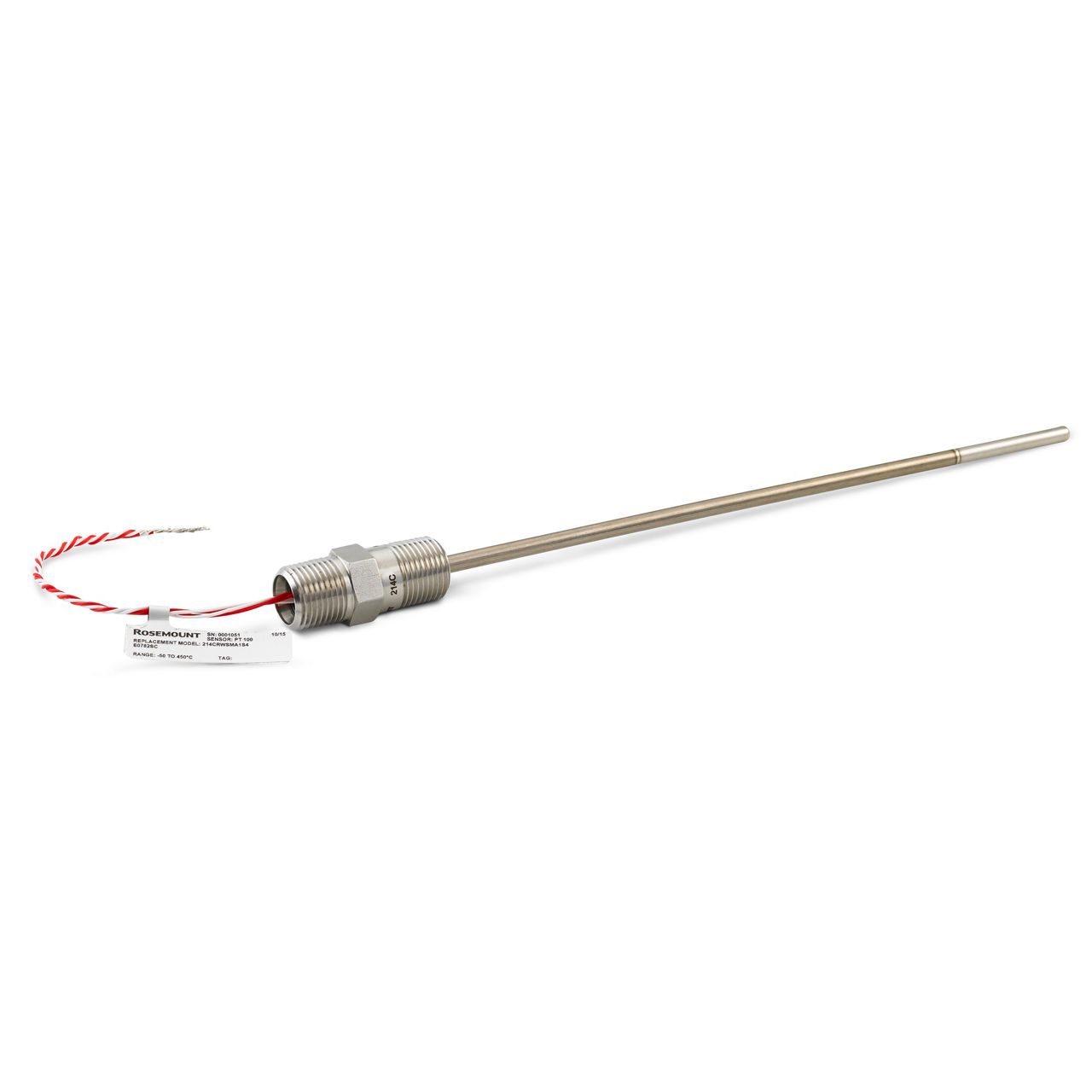
Industry-standard temperature sensor — RTD (PT100) and thermocouple (J, K, T, N, E) variants for tough process environments. Standard outside diameter ¼-in (6 mm). Two element technologies: wire-wound (best for low-temperature accuracy, -148 to 842 °F) and thin-film (best for vibration/physical shock, high-temp up to 1112 °F). Multiple sensor mounting styles (Spring-loaded, Welded, Compact, with-indicator) for direct immersion or thermowell pairing. Single or dual 3-wire/4-wire element configurations for redundancy or 4-wire accuracy. Pairs natively with Rosemount 114C / Twisted Square thermowells and 248 / 248R / 644 / 3144P / 3144S / 648 transmitters.
Industry-standard thermocouple sensor — the TC sibling of the 214C RTD platform. Same standard ¼-in (6 mm) OD, same mounting styles (Spring-loaded, Welded, Compact, with-indicator), same connection-head options as the RTD variant. Five thermocouple types: E (highest output, non-magnetic), J (most common, iron/constantan, -40 to 1400 °F), K (high-temp, Chromel/Alumel, up to 2192 °F), N (highest thermoelectric stability vs E/J/K/T), T (low-temp, copper/constantan, down to -321 °F). IEC 60584 Class 1 or 2 tolerance, plus ASTM E230 Special and Standard Tolerances. Pairs with Rosemount 114C / Twisted Square thermowells and 248/644/3144P/3144S/648 transmitters.
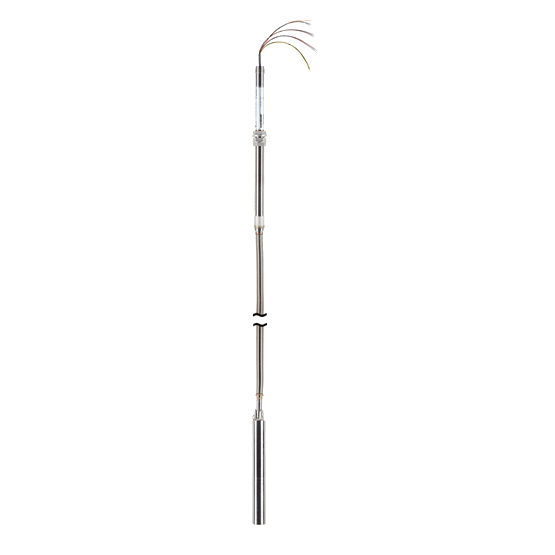
Multi-spot temperature sensor for ambient-temperature tank gauging — measures liquid temperature at multiple heights with up to 16 Pt-100 spot elements. Hung vertically from the top of the tank, length specified per tank height (2-70 meters / 80-2700 inches). 1-in 316 SST sheath, ANSI or EN flanged tank connections, four-wire / three-wire RTD options. IEC 60751 Class 1/6 B-sp tolerance (Class 1/10 also available with four-wire). Designed for atmospheric tanks up to 0.2 bar (2.9 psi); pressurized tanks require a thermowell. Pairs with the Rosemount 2240S Multi-Input Temperature Transmitter for FOUNDATION Fieldbus / Tankbus output.
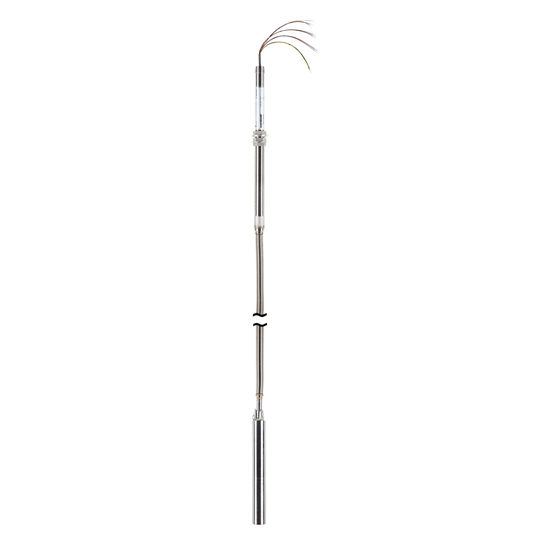
Multi-spot temperature sensor for cryogenic tank gauging — LNG, liquid nitrogen, liquid oxygen, liquid hydrogen, ethylene applications. Same flexible-tube architecture as the Rosemount 565 but with Class A Pt-100 sensors suitable for very low temperatures, and a special calibration procedure for sub-zero accuracy. Up to 16 spot elements, 2-70 m / 80-2700 in length range. Pairs with the Rosemount 2240S Multi-Input Temperature Transmitter for FOUNDATION Fieldbus / Tankbus output. Common pairing on the same 2240S with a Rosemount 614 cryogenic spot temperature sensor for tank-skin temperature.
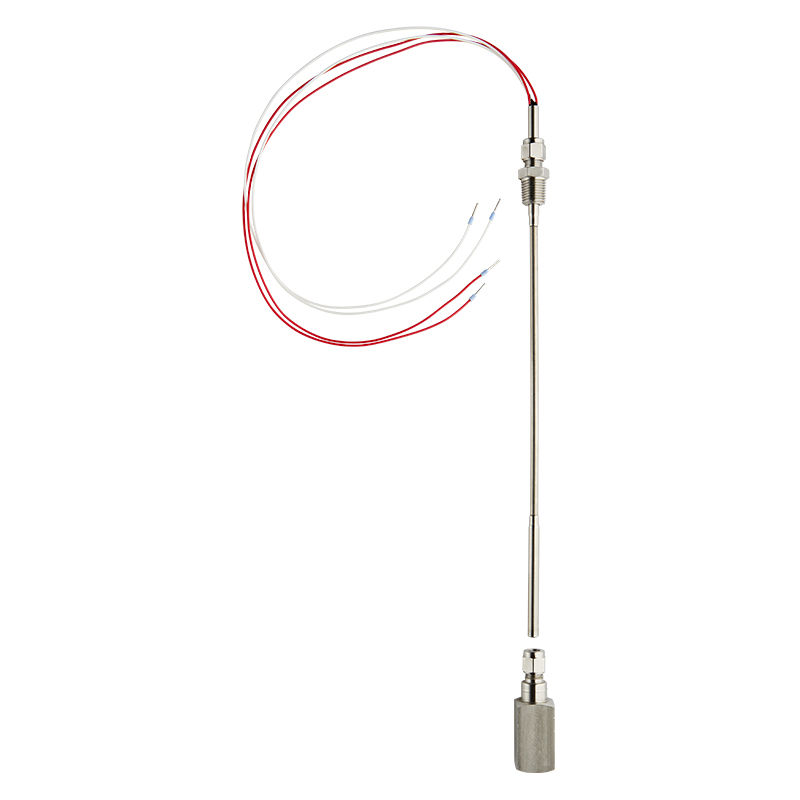
Single-spot cryogenic temperature sensor for LNG / cryogenic tank skin temperature, stratification detection, and Level/Temperature/Density (LTD) measurement. Designed to mount on the outside of cryogenic process equipment to measure skin or wall temperature without process penetration. Class A Pt-100 RTD, single or dual element, 4-wire or 3-wire configurations. Each Rosemount 2240S Multi-Input Temperature Transmitter supports up to 16 Rosemount 614 sensors — the standard architecture for monitoring multiple stratification points or skin-temperature locations across one large cryogenic tank.
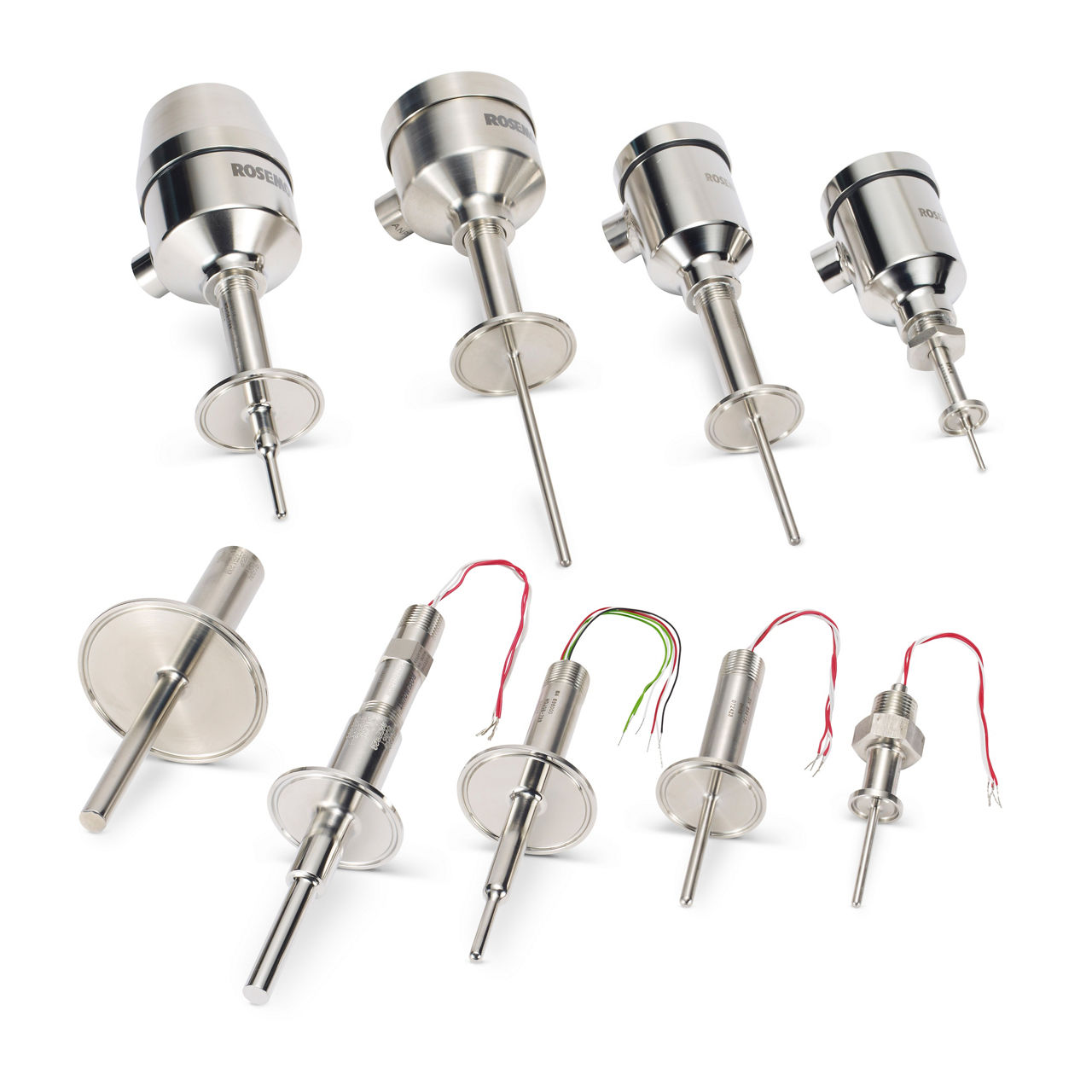
Sanitary RTD temperature sensor for hygienic process (Food, Beverage, Pharmaceutical, Biotech). Platinum element, -58 to 752 °F (-50 to 400 °C) operating range. Multiple sensor styles: Capsule (rigid lead-wire only), General-Purpose (most common), Spring-loaded (for thermowell pairing), Bayonet Spring-loaded (quick-disconnect). Wide range of immersion lengths (1-48 in in 0.5-in increments). Connection heads in aluminum (painted or unpainted), polypropylene, or SST. Pairs with sanitary process connections (tri-clamp, DIN-A/DIN-B sanitary thermowell heads). Model code starts with 0068 per Rosemount conventions.
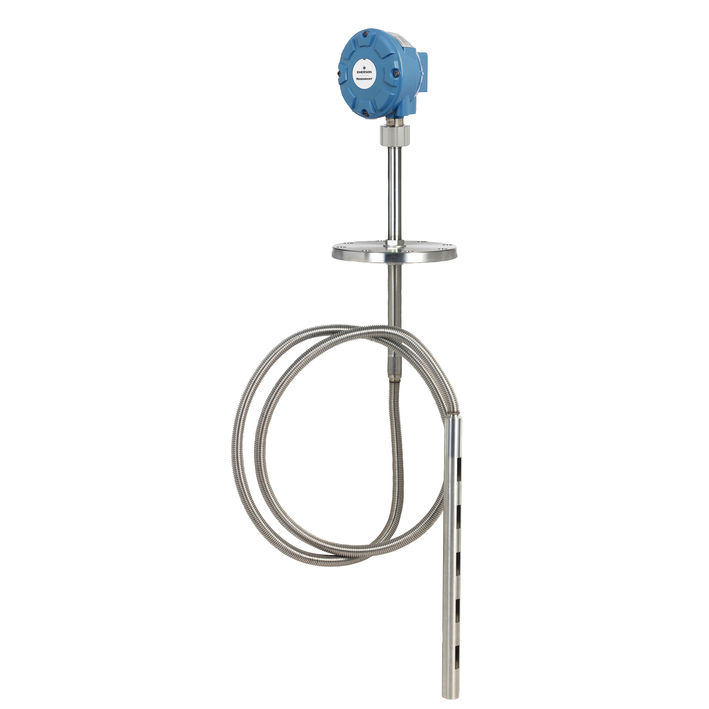
Multi-spot temperature sensor with an integrated water-level sensor — combines the Rosemount 565 spot-temperature architecture with a separate water-level probe along the same sensor tube. Used for monitoring the temperature profile AND the free-water layer at the bottom of crude oil / petroleum product storage tanks (water settles below oil; the height of the water layer is custody-transfer-relevant). Up to 16 Pt-100 RTD spot elements + 1 water-level input. Stainless steel 316 housing welded to the flexible temperature sensor tube. Pairs with the Rosemount 2240S Multi-Input Temperature Transmitter (which accepts the water-level signal on its Auxiliary input).